
Turkey...Oven Roasted
Description
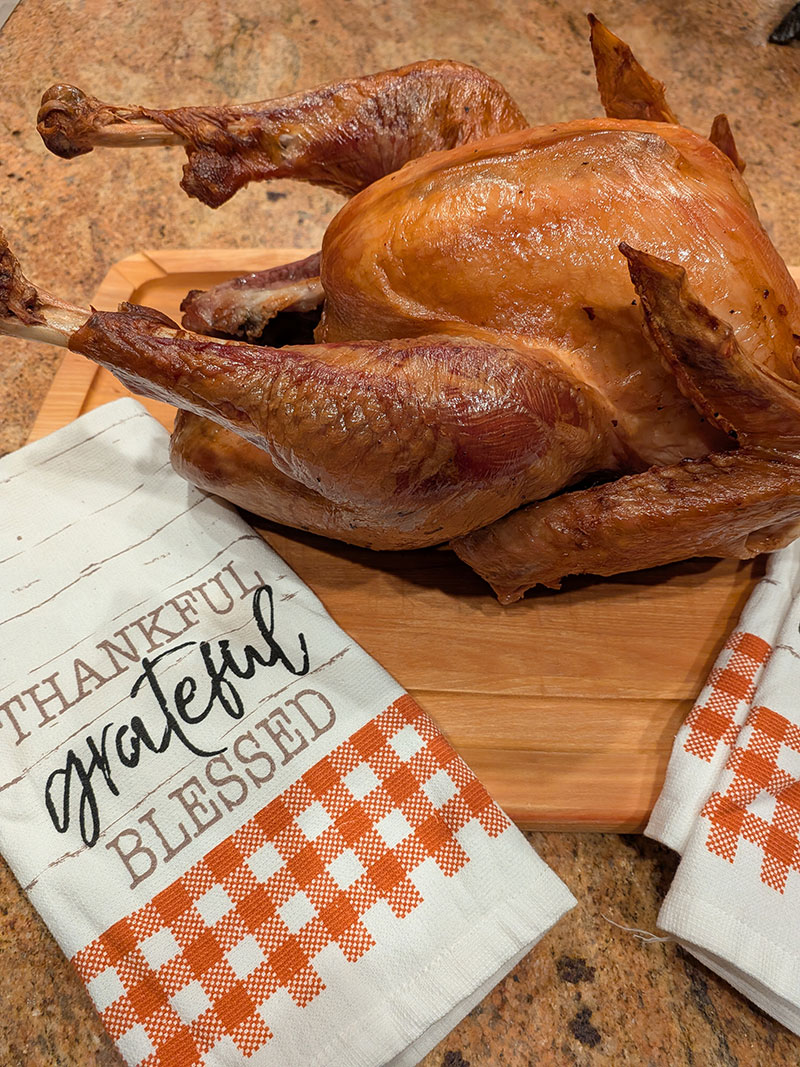
After researching and trying various different preparations, this is our favorite preparation of a roast turkey for our Thanksgiving table! It is so flavorful and the white and dark meat remain moist and tender.
At a Glance
Equipment
5-gallon Bucket or Soup Pot
Large Roasting Pan and Rack
Ingredients
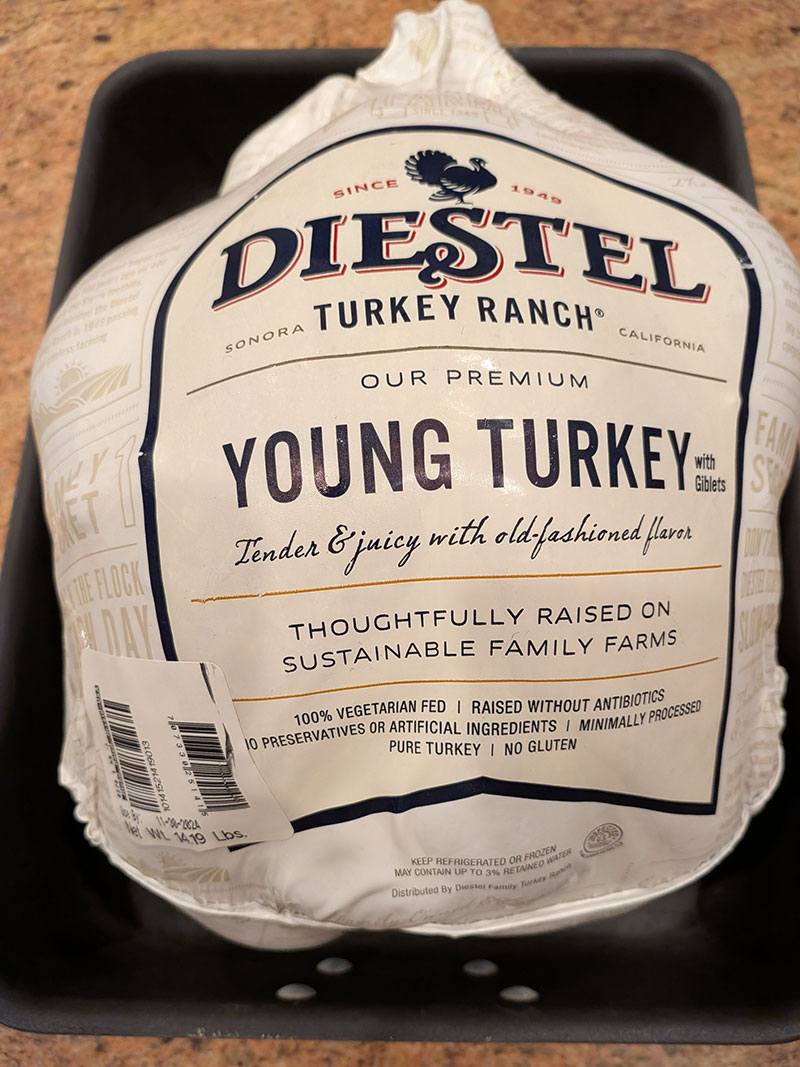
12 – 15 lb. of Premium Turkey, Whole*
For the Brine:
1 cup of Lawry’s Seasoned Salt (or substitute with Kosher Salt)
1 cup of Garlic Salt (or substitute with Kosher Salt)
1 cup of Kosher Salt
¼ cup of Celery Salt (or substitute with Kosher Salt)
For the Roast Turkey:
½ cup of Celery, chopped
½ cup of Carrots, chopped
2 cloves of Garlic, finely chopped
½ of a White Onion, fine chopped
3 tablespoons of Butter, melted
2 sprigs of fresh Thyme
32 ounces of Chicken Broth
6 slices of premium Bacon
Aluminum Foil
* While we used this premium turkey this year, a more economical and good turkey is the Butterball brand. We prefer a fresh hen turkey, but frozen can work too. Also, we prefer to not stuff the turkey; we prepare the turkey stuffing on the side with this recipe that you can review by clicking here.
Directions
At Al Lago Wines, we believe that every memorable meal begins with care. When preparing your holiday turkey, please follow proper hygiene practices to ensure the health and well-being of those gathered at your table. Always wash hands thoroughly with warm, soapy water before and after handling raw poultry, and use separate cutting boards and utensils to prevent cross-contamination. Keep raw poultry and its juices away from produce and ready-to-eat foods, and always roast your turkey to an internal temperature of 165°F (74°C). With these simple steps, your meal will be as safe as it is delicious. For more information on the best practices for working with turkey and other types of poultry, please click here.
If you are using a frozen turkey, bring the turkey out of the freezer and place in the refrigerator several days in advance to ensure that the turkey is fully defrosted first.
Several days in advance of your turkey dinner, make sure the turkey is defrosted if it was frozen. Whether you have a fresh turkey or a defrosted, when you are ready to begin preparing it, remove the turkey from the plastic wrap and remove the giblets, which will be used in the gravy and stuffing. Store the giblets in a plastic bag in the refrigerator.
To brine the turkey:
In a large, 5-gallon plastic bucket (or soup pot), fill half-full with very cold water and stir in all of the salts for the brine, then stir until fully dissolved and mixed in. Place the turkey in the salt water (brine), and ensure that the turkey is fully covered in brine. Ensure that the breast cavity of the turkey is also filled with brine. Add ice to keep the water cold and to bring the brine level over the turkey.
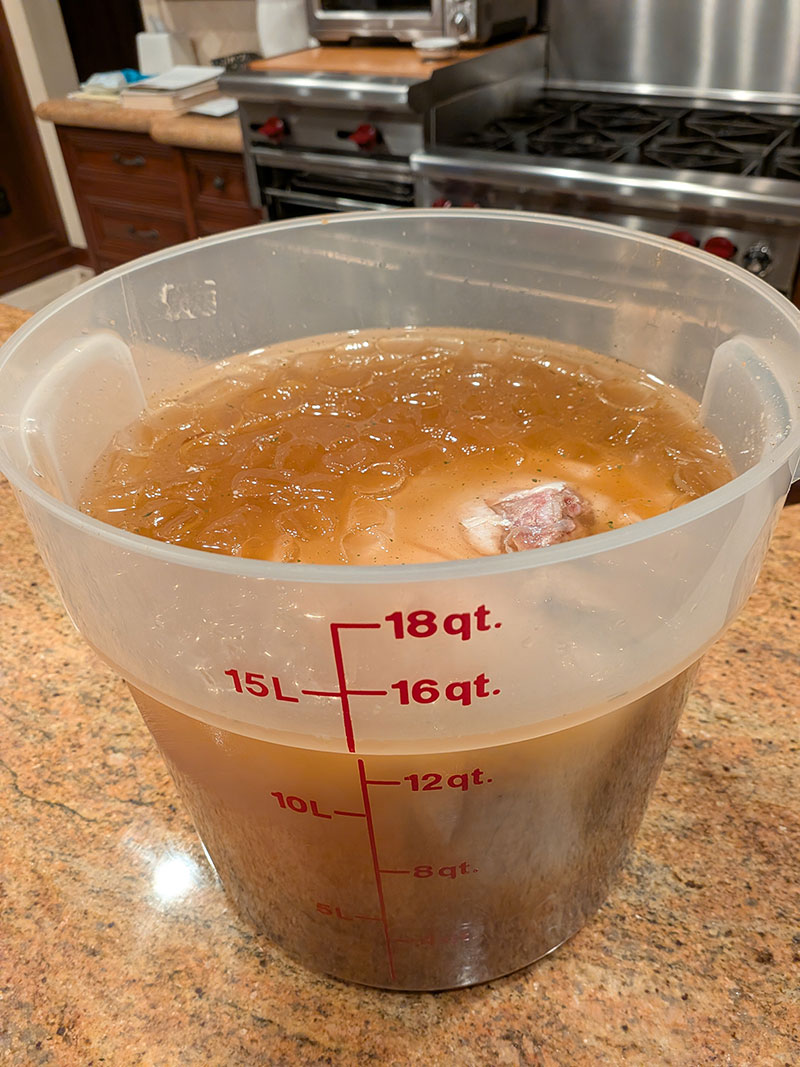
Carefully place the turkey in the brine in the bucket in the refrigerator for 4-8 hours or overnight. After 4-8 hours or the next morning, remove the turkey from the brine, discard the brine, and thoroughly rinse the turkey to remove all salt (including in the breast cavity).
Place the brined and rinsed turkey on a rack on top of a roasting pan, and put the turkey back into the refrigerator uncovered for about 8 hours.
To roast the Turkey:
Roast the bacon on a rack over a baking sheet to collect the bacon drippings. (For further information on roasting the bacon, please see the recipe by clicking here.)
Pre-heat the oven to 400 degrees F. Remove the turkey from the refrigerator, take the turkey out of the roasting pan, and wash the rack and roasting pan. Put the turkey back on the rack in the roasting pan with the breast side down.
In a bowl, place the carrots, celery, garlic, and onion, and pour the melted butter over top of it and mix to ensure it is fully integrated. Place half of the resulting mixture into the breast cavity of the turkey, along with a sprig of fresh thyme. Scatter the remainder of the vegetables in the bottom of the roasting pan, and add 1 ½ cups of chicken broth to the bottom of the pan.
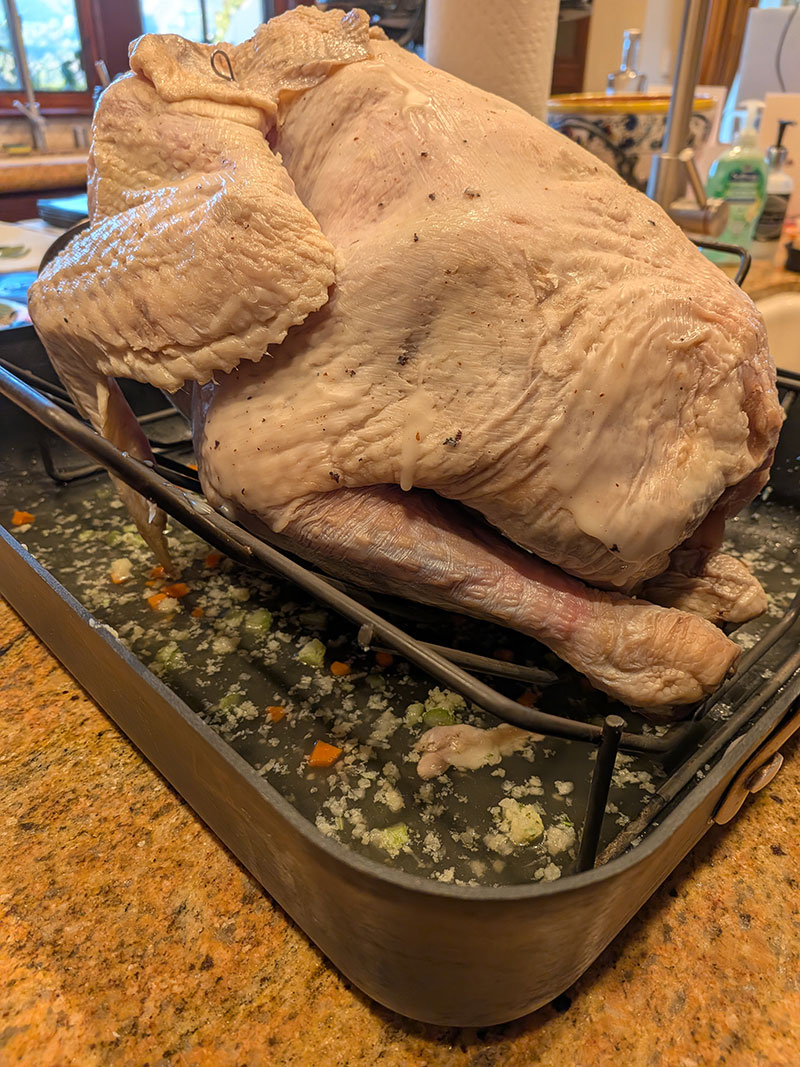
Collect the bacon drippings from the baking sheet. (Keep the bacon for another recipe for Thanksgiving, such as in this recipe for green beans– click here.) You can substitute the bacon drippings with butter, but we prefer bacon drippings. With a pastry brush, brush the back side of the turkey (including the wings and legs) with the bacon drippings. (Please don’t brush the breast side of the turkey yet.) Place the turkey in the pre-heated oven for an hour.
After an hour, remove the turkey from the oven. Carefully flip the turkey over, so that the breast side of the turkey is now facing up. (It is important to take care in this process because it is very hot, so we often used “bunched up” kitchen paper towels to help flip the turkey over.) With a pastry brush, brush the breast side of the turkey (including the wings and legs) with the bacon drippings and add another 1 ½ cups of chicken broth to the roasting pan. Place the turkey back in the oven and reduce the oven temperature to 375 degrees F. Roast the turkey for two more hours. Check the temperature of the turkey during this period after 90 minutes; the target roasting temperature of the turkey is 165 degrees for the breast and 170-175 degrees for the thighs. When you remove the turkey to check the temperature, add another cup of chicken broth to the roasting pan, assuming that the turkey has not yet reached the correct roasting temperature. If the target roasting temperature has not been reached after 90 minutes, return the turkey to the oven for 15-30 minutes and check again, and repeat until the desired temperature is reached.
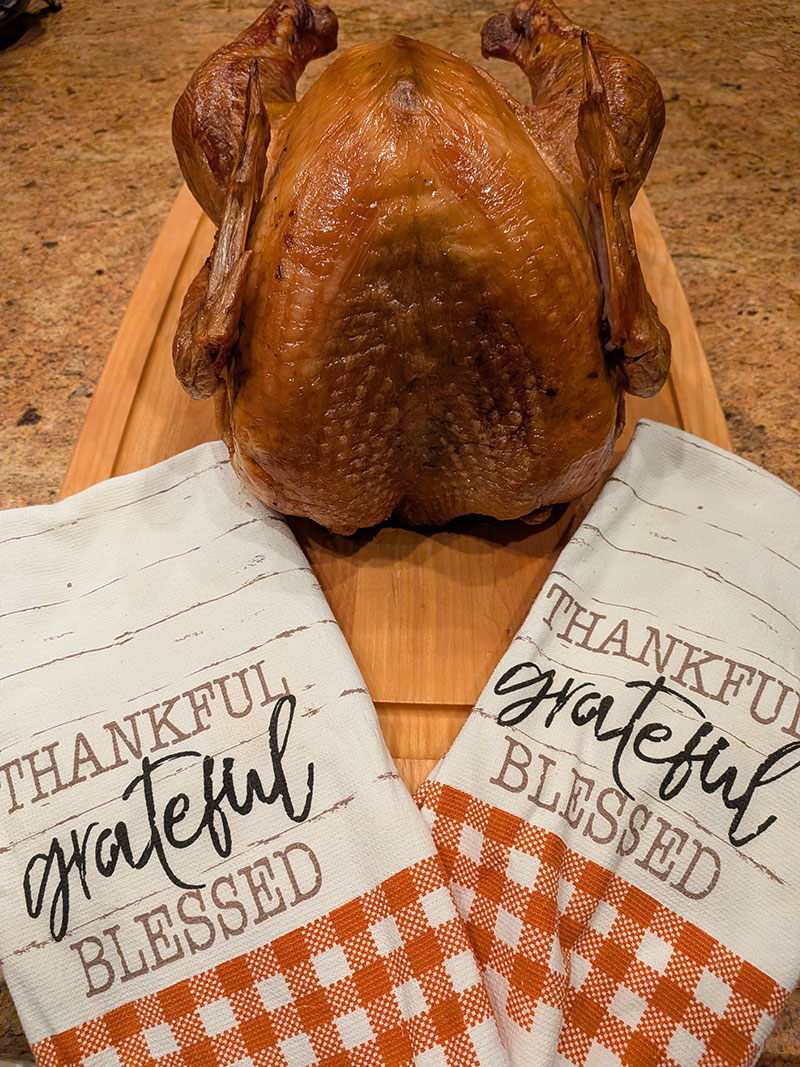
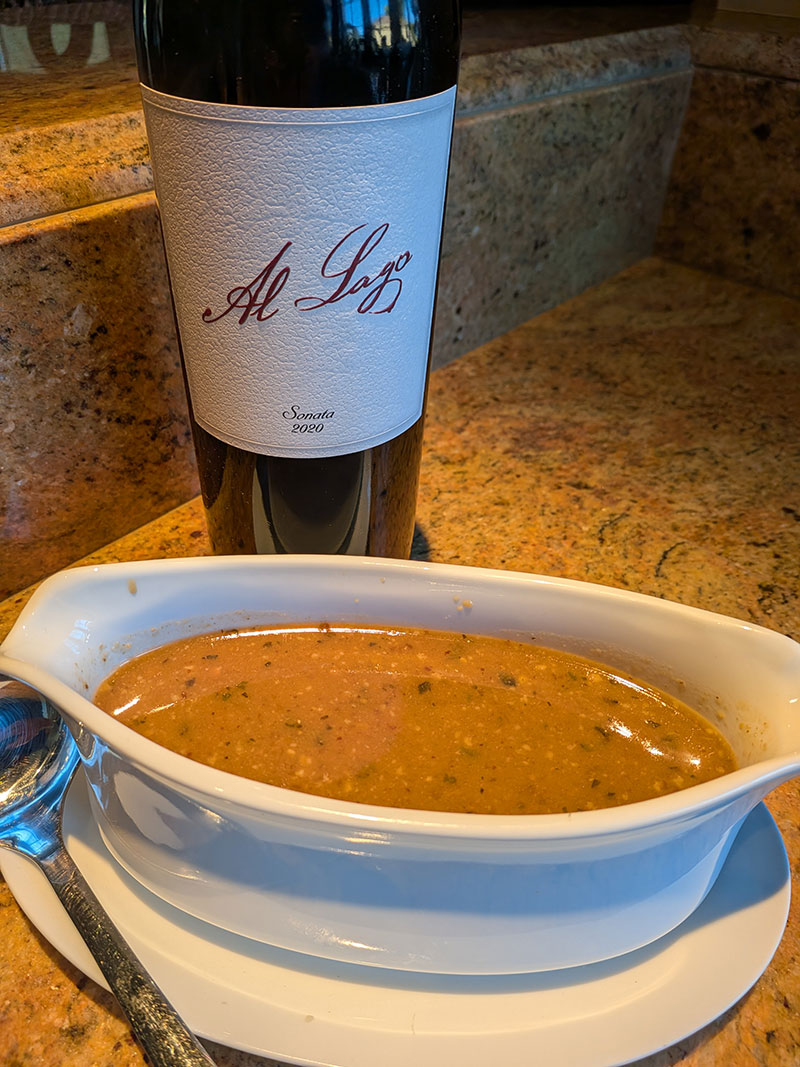
When the target roasting temperature is achieved, remove the turkey from the oven and take it off of the rack and place it on a large carving board. Tent the turkey with aluminum foil, and allow it to rest for at least 20-30 minutes. With a slotted spoon, save the vegetables from the roasting pan, add the vegetables from the breast cavity, and place all of it in a bowl to be used for the turkey gravy. (Please click here for the recipe.) Keep the drippings from the roasting pan separate from the turkey juices. The turkey grease can now be discarded but keep the turkey juices for the gravy.
For a demonstration of the best way to carve a roasted turkey, click here.
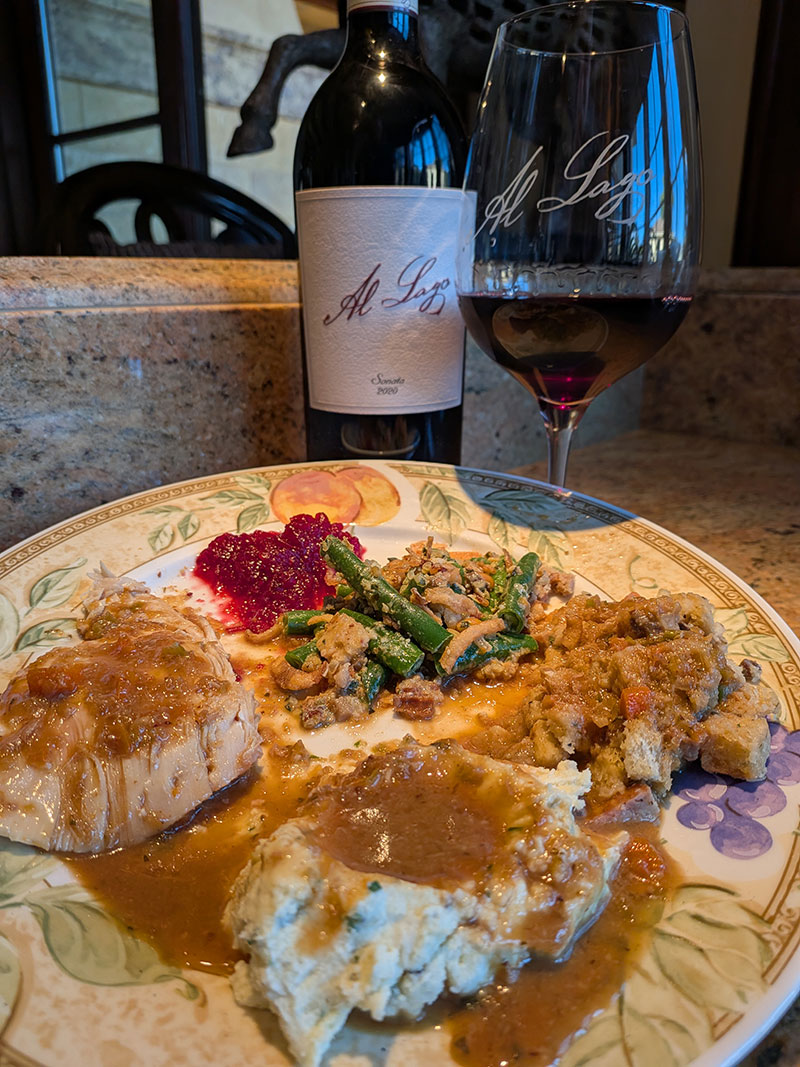
Wine Pairings
Related Recipes
-
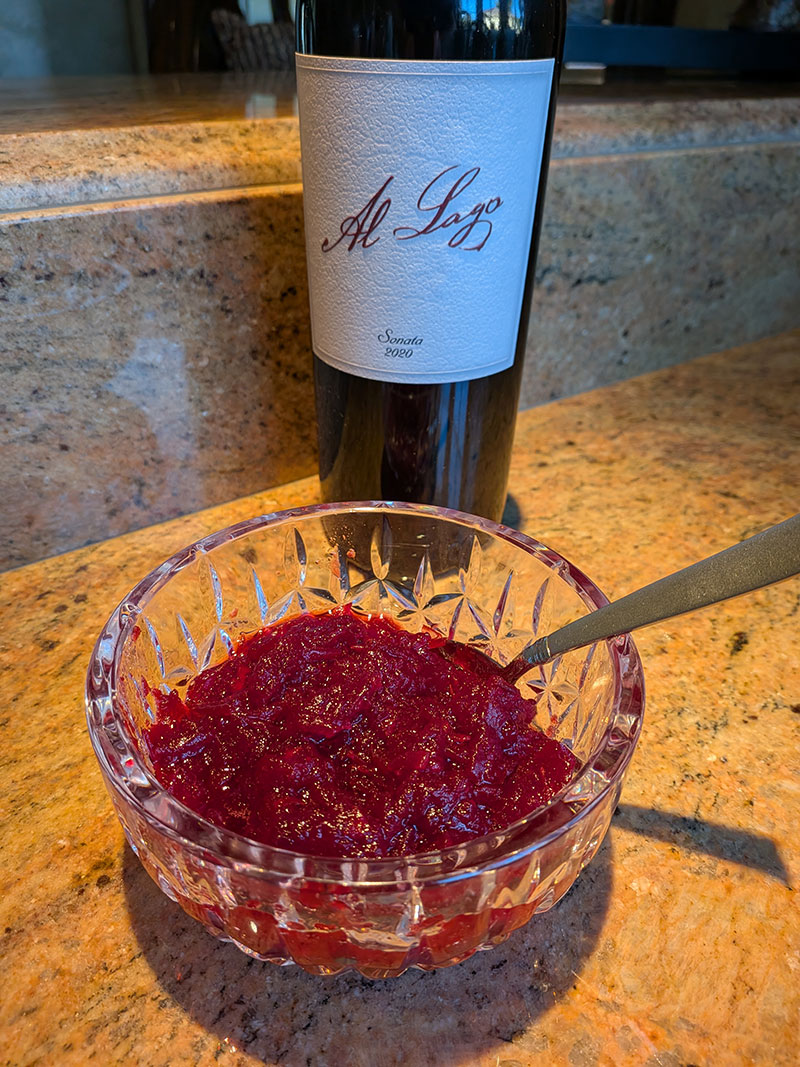 Other Side Dishes
Cranberry Sauce…Fresh and Homemade